
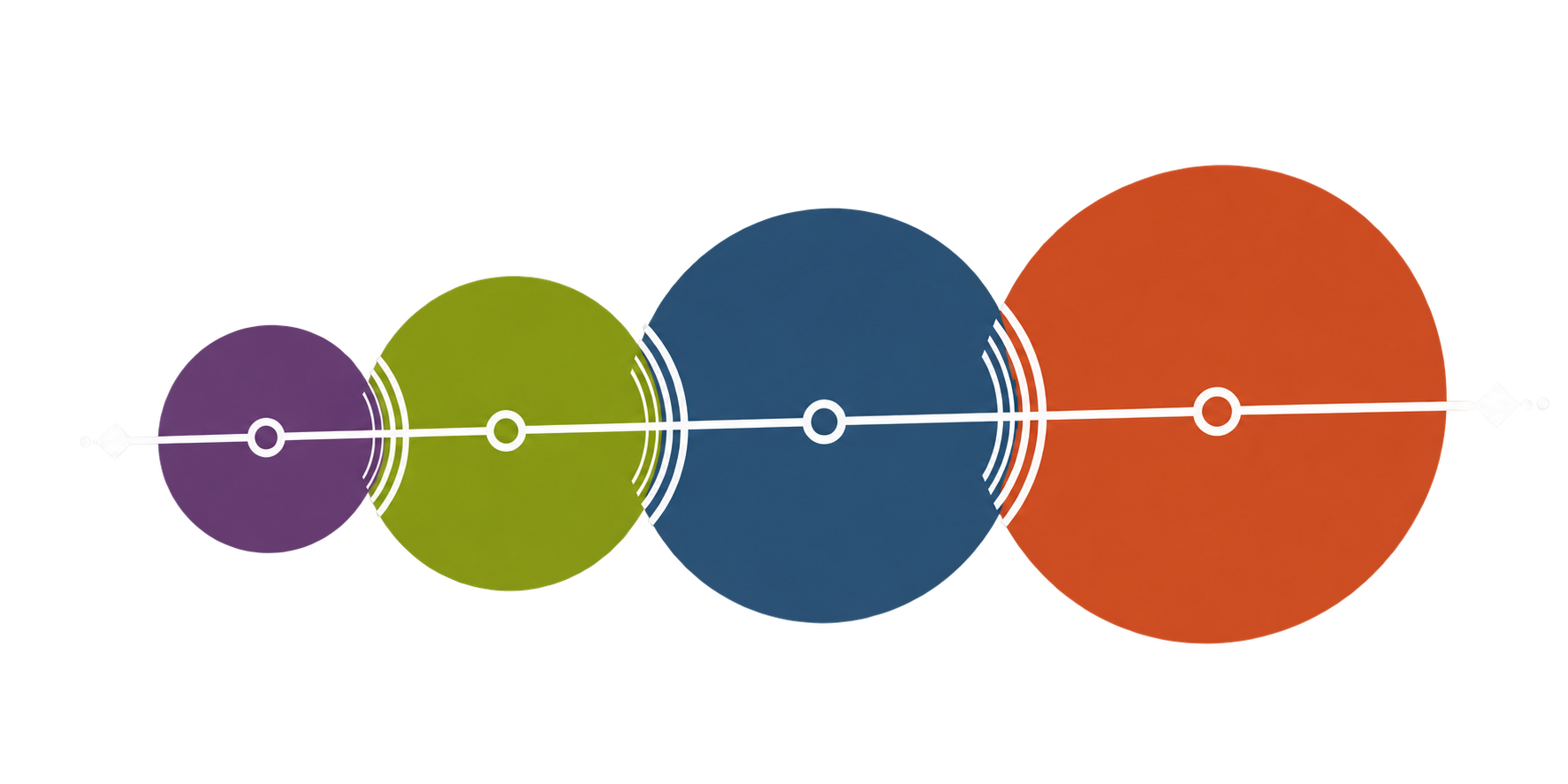
One work, at four scales.
COACHING
FACILITATION
TEACHING & TRAINING
STRATEGIC PLANNING
They look like four services. They're closer to one practice, applied to moments at four different scales.
A person faces a moment alone: a decision that won't resolve, a frontier where the old approaches no longer reach.
A group faces a moment together, in a room where the real conversation keeps not happening.
A team faces recurring moments, and needs shared ground to meet them.
And an organization can stand at a threshold of its own, where the next chapter can't be scripted from the last one.
The scale changes. The work doesn't. Meet the moment as it is. Grow the capacity to keep meeting it. Respond to what's here, not what the script says should be here.
This also means you don't need to arrive knowing which service you need. Many engagements begin at one scale and reveal another. Start a conversation, and the right starting point usually makes itself clear.
Coaching

For the moments you face yourself
Most leaders have become expert managers of themselves. Planning, optimizing, navigating, performing steadiness whether or not it's there. And still something essential goes unmet. Decisions take more energy than they should. Relationships stay a little distant. The work is meaningful on paper, and somehow it isn't landing.
Coaching with Christy doesn't add technique to that management. It grows your capacity to meet the moments that matter: the complex conversation, the high-stakes decision, the tension that won't resolve on schedule. To stay present when it gets uncomfortable, to feel the pull of the old fix without being run by it, and to respond from your own knowing rather than from the script.
Sessions are experiential and grounded in what's happening now, in your real life and leadership, not a rehearsal version of it. The work interrupts habitual patterns, attunes to what's underneath the surface, and practices new ways of being in real time, so the capacity is there when the moment arrives.
What clients notice:
Less reaching for external answers, more trust in their own sensing
Decisions aligned with what matters most, not just with what's familiar
The ability to hold complexity without resolving it prematurely
Presence that holds under pressure, paradox, and competing demands
Coaching fits if:
The approaches that built your success have stopped addressing the problems in front of you
You're navigating transition, complexity, or something that feels like emergence
You're willing to engage yourself, not just the situation
Facilitation
For the moments a group
meets together
Groups rarely lack ideas. What goes missing is the capacity to meet the moment in the room: to name what's here, engage difference honestly, and move from that honesty into real alignment. Without it, conversation circles. Tension goes unspoken. The meeting ends in apparent agreement that quietly dissolves by Thursday.
Christy works with what's in the room as it unfolds. She names what's being said and what it carries, surfaces the tension underneath, and draws every voice in, including the quiet ones holding the piece nobody else has. The positive intent behind each position gets named. And the group is held in productive tension long enough for something genuinely new to become visible.
Here's what makes this different from being managed toward consensus: the group isn't handed alignment. It meets its own moment, with someone alongside who knows how to keep it from collapsing. Which is why groups leave with more than a decision. They leave having practiced the conversation itself, and that capacity stays in the room after Christy is gone.
Facilitation fits when:
Conversations loop without progress
Important tensions are present and going unaddressed
A decision needs real alignment, not compliance
Leadership or governance is at a crossroads

Teaching & Training

For the moments that keep coming
A team without shared language can't think together. Each person meets the hard moment privately, in their own vocabulary, and the team never quite meets it as a team.
Teaching and training build the necessary shared ground. Sessions are participatory and grounded in real application: Christy introduces models and frameworks as starting points, then guides the group in working with them directly, questioning assumptions, finding what's true in their specific context. The frameworks aren't the work. They're doorways into it. What the team keeps is the shared language and the practiced capacity to use it when it counts.
Because the moments a team faces keep coming. The value isn't in surviving one of them. It's in becoming a team that knows how to meet them together.
Offerings include:
Workshops, half-day to full-day, in leadership, communication, and self-awareness
Training series of three to eight sessions for deeper integration
Leadership cohorts with peer dialogue and real-time practice
Board and governance training
Custom sessions for organizations and professional groups
Strategic Planning
For the moment an organization
is standing in
Organizations arrive at thresholds, too. A chapter ends, the environment shifts, and the approaches that built the place no longer carry it forward.
Most strategic plans fail at exactly this point, and not from lack of vision. They fail from a lack of truth. Misalignment goes unspoken. Operational realities get smoothed over in the interest of agreement. The finished document reflects what leadership hoped was true rather than what is, and a plan built on hope alone can't hold.
Strategic planning with Christy treats the planning itself as the organization's moment to meet. Disagreement gets surfaced rather than managed. What's possible gets named honestly, alongside what isn't yet. People across the organization are engaged, so the direction that emerges is one that leadership is genuinely ready to stand behind because they built it from what's real now.
Vision matters here. So does the organization's honest capacity to carry it: leadership alignment, operational reality, governance, the willingness to decide and keep deciding. The process develops both at once, which is why the direction holds after the binder goes on the shelf.
What organizations leave with:
Clear direction that leadership is ready to act on
Real alignment across key stakeholders, not assumed agreement
An honest understanding of capacity, risk, and opportunity
Commitment to the vision and to the path it requires

Not sure where to start?
That's common, and it's not a problem. The scales connect: leaders who get coached facilitate differently, teams with shared language plan more honestly. Tell Christy what's in front of you, and the right starting point usually makes itself clear.